
Part L pipe insulation can look straightforward until you have to decide which pipes need insulating, what thickness is required and whether a particular insulation material actually meets the specification.
This guide breaks the current England requirements down into practical terms for plumbers, heating engineers and mechanical contractors — including the key thickness tables, how thermal conductivity affects the answer, common installation mistakes and a final compliance checklist.

What thickness pipe insulation does Part L require?
There is no single Part L insulation thickness for every pipe. The correct thickness depends on whether the work is domestic or non-domestic, the pipe diameter, service temperature, insulation thermal conductivity and the relevant project specification.
Under the current Approved Document L guidance for dwellings in England, one route to demonstrating acceptable heat loss uses high-performance insulation with thermal conductivity of 0.025 W/(m·K) or better. The listed minimum thicknesses are 5mm, 10mm, 15mm or 20mm, depending on nominal internal pipe diameter.
Commercial and non-domestic systems use different tables and can require substantially greater insulation thicknesses.
Current England position: the 2021 Approved Document L, incorporating the 2023 amendments, remains the current technical guidance for buildings subject to those standards. A 2026 edition has already been published but generally starts taking effect during 2027. Always check the regulatory basis and transitional arrangements for the individual project.
Does Part L apply everywhere in the UK?
No. The Approved Document L figures discussed in this guide are for England.
Wales publishes its own Approved Document L, while Scotland and Northern Ireland operate under their own building standards and regulations. For work outside England, check the applicable national guidance before using the thickness tables below.
Which pipes need insulating under Part L?
For a new system in a dwelling, current Approved Document L guidance for England identifies several categories of new pipework that should be insulated.
Heating circuits
Primary circulation pipes should be insulated where they pass outside the heated living space, including pipework passing into voids.
Domestic hot water
Primary domestic hot-water circulation pipework and all secondary circulation pipework are included.
Hot-water cylinders
Pipes connected to a hot-water storage vessel should be insulated for at least 1m from their connection to the vessel.
Part L pipe insulation thickness for dwellings
Approved Document L Volume 1 states that heat losses from insulated pipework should not exceed the values given in BS 5422 for hot-water services at 60°C. Its Table 4.4 provides one way of demonstrating this using high-performance insulation with a thermal conductivity of 0.025 W/(m·K) or better.
| Nominal internal pipe diameter | Minimum insulation thickness | Condition |
|---|---|---|
| ≤ 10mm | 5mm | λ ≤ 0.025 W/(m·K) |
| ≤ 25mm | 10mm | λ ≤ 0.025 W/(m·K) |
| ≤ 50mm | 15mm | λ ≤ 0.025 W/(m·K) |
| ≤ 100mm | 20mm | λ ≤ 0.025 W/(m·K) |
Important: These are not universal pipe-lagging thicknesses. They apply to the conditions stated in Approved Document L and insulation with λ of 0.025 W/(m·K) or better. For other circumstances, the document directs users to BS 5422.
Are Part L insulation thicknesses different for commercial pipework?
Yes. Approved Document L Volume 2 uses separate indicative tables for low-temperature hot-water heating and domestic hot-water services in non-domestic buildings.
It also states that insulation thickness should be calculated in accordance with BS EN ISO 12241, with manufacturers normally able to provide performance information for individual insulation products.
Low-temperature hot-water heating
| Nominal internal pipe diameter | λ = 0.025 W/(m·K) | λ = 0.040 W/(m·K) |
|---|---|---|
| ≤ 10mm | 15mm | 30mm |
| ≤ 15mm | 15mm | 35mm |
| ≤ 25mm | 20mm | 40mm |
| ≤ 32mm | 20mm | 45mm |
| ≤ 40mm | 25mm | 45mm |
| ≤ 80mm | 25mm | 50mm |
| ≤ 100mm | 30mm | 55mm |
Indicative Table 4.4 figures for low-emissivity faced insulation and LTHW heating systems up to 95°C. Other circumstances should be checked against BS 5422.
Domestic hot-water services in non-domestic buildings
| Nominal internal pipe diameter | λ = 0.025 W/(m·K) | λ = 0.040 W/(m·K) |
|---|---|---|
| ≤ 10mm | 15mm | 35mm |
| ≤ 20mm | 20mm | 35mm |
| ≤ 40mm | 25mm | 40mm |
| ≤ 80mm | 25mm | 45mm |
| ≤ 100mm | 30mm | 45mm |
These figures relate to hot-water services at 60°C and low-emissivity faced insulation. They are an indicative compliance route rather than a substitute for the project specification.
Why does thermal conductivity affect insulation thickness?
Thermal conductivity — normally shown as λ or lambda in W/(m·K) — describes how readily heat passes through the insulation.
In simple terms, a lower lambda value means better thermal resistance for a given thickness. That is why two products installed on exactly the same pipe may require different insulation thicknesses to achieve the same heat-loss target.
The manufacturer's declared thermal performance, the temperature at which that value applies, the pipe service and the applicable standard all need to be considered.
Which type of pipe insulation is best for Part L work?
There is no single “Part L insulation material”. Compliance comes from the complete specification — material performance, thickness, application and installation quality.
Phenolic pipe insulation
High thermal performance makes phenolic insulation particularly useful where the required heat-loss performance needs to be achieved within a restricted insulation thickness.
Explore Phenolic Pipe Insulation →Mineral wool pipe insulation
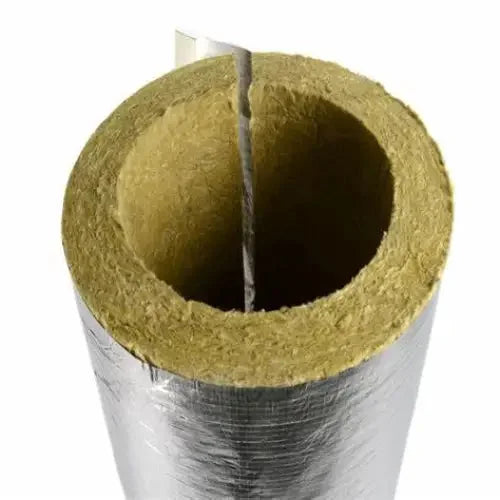
A common option for heating, hot-water and mechanical-services pipework, particularly where temperature performance and fire characteristics are important considerations.
Explore Mineral Wool Pipe Insulation →Rubber pipe insulation
Closed-cell elastomeric insulation is widely used on chilled-water, refrigeration and cold services where condensation control and a correctly sealed vapour barrier are important.
Explore Rubber Pipe Insulation →Insulation with protective cladding
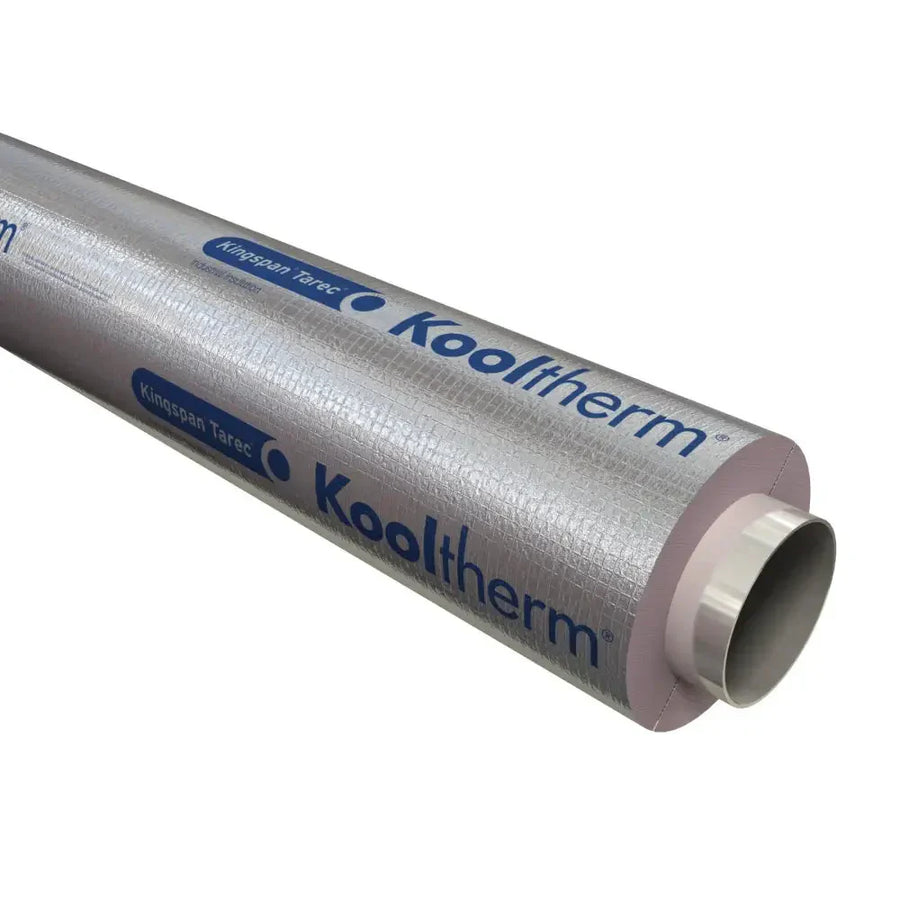
External insulation needs suitable weather protection. Options can include factory-applied PIB systems or insulation finished with an appropriate separate cladding system.
View Pipe Insulation Options →Does Part L also cover chilled and cooling pipework?
For non-domestic buildings, current Approved Document L guidance states that cooling pipework should be insulated along its whole length, subject to the detailed provisions in the document.
The insulation should control heat gain, but cold-service design also needs to consider condensation. That makes correct vapour sealing particularly important.
What is the relationship between Part L and BS 5422?
Part L sets the regulatory requirement to limit heat gains and losses from building services. BS 5422 provides a method for specifying thermal insulation requirements for pipework, tanks, vessels, ducts and equipment across a wide range of operating temperatures.
There is an important detail for contractors to be aware of: the current BSI edition is BS 5422:2023, while the current Approved Document L tables were produced against earlier BS 5422 provisions.
For a wider explanation of UK insulation standards, see our UK Pipe Insulation Standards and Regulations Guide .
Common pipe insulation mistakes that can undermine compliance
Correct thickness on the delivery note does not automatically mean the finished installation performs as intended.
Part L pipe insulation compliance checklist for plumbers
Before ordering or signing off the pipe lagging, work through these checks.
- Confirm whether the project is in England, Wales, Scotland or Northern Ireland.
- Establish whether the building is a dwelling or non-domestic.
- Confirm which regulatory edition and transitional arrangements apply.
- Identify the service: heating, DHW, chilled water, refrigeration or other.
- Confirm the actual pipe size and how it relates to the table being used.
- Check the insulation manufacturer's declared thermal conductivity.
- Check that the lambda value is appropriate to the relevant temperature.
- Select the thickness from the applicable Part L, BS 5422 or project specification.
- Allow for bends, tees, valves, flanges, supports and other fittings.
- Maintain vapour sealing on chilled and condensation-risk services.
- Specify suitable cladding or protection for external installations.
- Check whether frost-risk pipework also requires trace heating.
- Keep relevant product data and specification information where required.
- Check the finished installation rather than the straight pipe runs alone.
Not sure which insulation thickness or material to order?
Send us your pipe sizes, service type, required insulation thickness, quantities, and any cladding or trace heating requirements. Our team will recommend the most suitable products or provide a tailored quote for your project.
Is Part L changing in 2027?
Yes. A new 2026 edition of Approved Document L has already been published for England, but its main commencement dates are in 2027 and transitional arrangements apply.
This is particularly important for projects being designed or tendered now but constructed after the new requirements take effect.
We have covered the forthcoming changes separately in our Future Buildings Standard 2026 Pipe & Duct Insulation Guide .
Find the right insulation for your pipework
Once the service, pipe size, required thermal performance and insulation thickness are established, the next step is matching the specification to the most suitable insulation material.

Need help choosing or pricing pipe insulation?
Whether you're ordering a few pipe sections or pricing a larger mechanical-services project, speak to our team, explore trade account options, or browse the full Insulation & More range.
Sources and further reading
For regulatory or specification-led work, always check the current source documents rather than relying solely on summary guidance.
- GOV.UK — Approved Document L: Conservation of Fuel and Power — current England guidance including Volume 1: Dwellings and Volume 2: Buildings other than dwellings.
- GOV.UK — Approved Document L 2026 — forthcoming England standards and supporting documents.
- BSI — BS 5422:2023 — Thermal insulating materials for pipes, tanks, vessels, ductwork and equipment.
- Welsh Government — Approved Document L — conservation of fuel and power guidance applicable in Wales.
Technical disclaimer: This article is intended as practical general guidance and does not replace the Building Regulations, Approved Documents, British Standards, manufacturer technical data or an individual project's mechanical-services specification. Requirements may vary according to system temperature, pipe dimensions, insulation properties, project location, building type and applicable transitional arrangements. Always confirm the project requirements before specifying or installing insulation.